School enrollment improved
- July 27, 2026
- Posted by: jesse
- Category: Success Stories
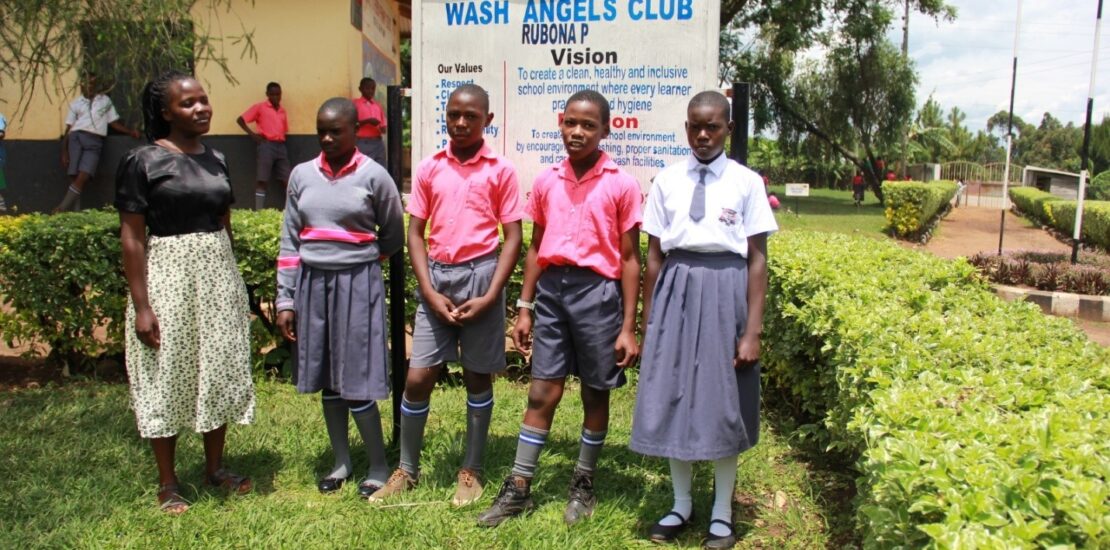
Schools in Rubona Sub-County and Rwimi Town Council, Bunyangabu, were faced with a lack of pit latrines, leading to low enrollment of pupils. Some schools had one pit latrine shared between pupils and Teachers. Some parents declined to trust the schools with their children.
Rubona in and Kaburaisoke Hill Primary Schools are some of the schools. WASH became a serious challenge in the two schools. In addition, Kaburaisoke Hill Primary School did not have access to clean water. This meant that pupils would walk long distances to access water while at school.
In 2024, Jese, with funding from SIMAVI, started the WASH, Learn and Share project. The project’s aims are: to establish WASH Model Schools resulting in a healthy environment for girls & boys in 9 primary schools; to improve WASH conditions at the community level linking with school initiatives in 18 communities surrounding the target schools; and to provide sustainable WASH products and services at schools & communities through local government (public) and private sector collaboration.
“When Jese came with interventions to our school, all our problems were solved. A new pit latrine was constructed, mobile hand-washing facilities were procured for us, our pupils were trained to make Reusable Sanitary Pads (RUMPs), and liquid soap.” Ms. Jolly Angella, the Deputy Head Teacher, Rubona Primary School, shared.
With the interventions in the two schools, WASH Angels clubs were formed to oversee and promote hygiene at the schools, reducing the expenditure. This motivated the Rwimi Town Council leaders to construct a 2-stance pit latrine in Kaburaisoke Hill, in addition to the four-stance drainable pit latrine constructed by the WASH and Learn project.
” Before the interventions, we would spend 30,000= to procure sanitary pads for our girls. Ever since the training on RUMPs, we have been making our own, with support from the pupils from primary four to seven.” Shared, Jolly, Rubona.
The schools were also introduced to the cost recovery initiative in preparation for sustainability. Key interventions are: Matooke plantations, liquid soap production, making reusable sanitary pads, and vegetable growing. These have supported income generation, and the profits made are loaned to teachers.
Ms. Jolly from Rubona shared that her teachers get loans, and once payment was made, they bought 3 goats and a cow. The goats bought have already produced, bringing the total number of goats to 8. The animals have produced organic manure used to boost the vegetable and matooke gardens.
While in Kaburaisoke Hill Primary School, their expenditure has reduced ever since the training on liquid and sanitary pad production. Before the training, the school would spend 240,000 per year to procure liquid cleaning for the washrooms and classes. Now, they spend 50,000 shillings to purchase materials for making liquid soap used for the whole year. Shared Ms. Kabugho Zulien, Deputy Head Teacher, Kaburaisoke Hill Primary School.
The enrollment in both schools has improved following the different interventions under the WASH, Learn, and Share project. In Rubona, the enrollment improved from 712 in 2024 to 837 pupils with steady attendance. While in Kaburaisoke, the enrollment has improved from 190 pupils in 2024 to 305 in 2026.
The school administrators shared a plan to continue the cost recovery projects to reinforce the desired behavior and enhance sustainability beyond the project.
“We plan to produce more liquid soap, sanitary pads, and sell them to other schools and community members to raise more income.” Share Ms. Kabugho Zulien.
